
 Facebook
 X
 Pinterest
 Copy Link
Your offer has been accepted, and now there is a contract with a lot of boxes and blanks. Do not worry! The Agreement of Purchase and Sale is really just a written list of what the buyer and seller have agreed to, and once you know what each part does, it is much less scary. Let’s go through it together!
What Is an Agreement of Purchase and Sale?
It is the written contract between a buyer and a seller. The buyer offers to buy the home on certain terms, and when the seller accepts, those terms become the agreement. In New Brunswick, REALTORS® use a form approved by the New Brunswick Real Estate Association. A REALTOR® can walk you through the form, and your lawyer can explain what it means legally. Click the Real Estate Lawyer and Title Insurance in New Brunswick link to see how a lawyer fits in.
The Basics: Price, Closing Date and Deposit
The first page covers the big details: the property address you are offering to purchase, the price you’re offering for the property, and whether HST applies and is included in the offering price. It also sets your closing date, which is the day the sale is completed, and the date and time of the buyer’s final walk-through before closing. The deposit is the money the buyer puts forward with the offer or submits on a specified date. It is held in trust, and it counts toward the purchase price when the sale completes.
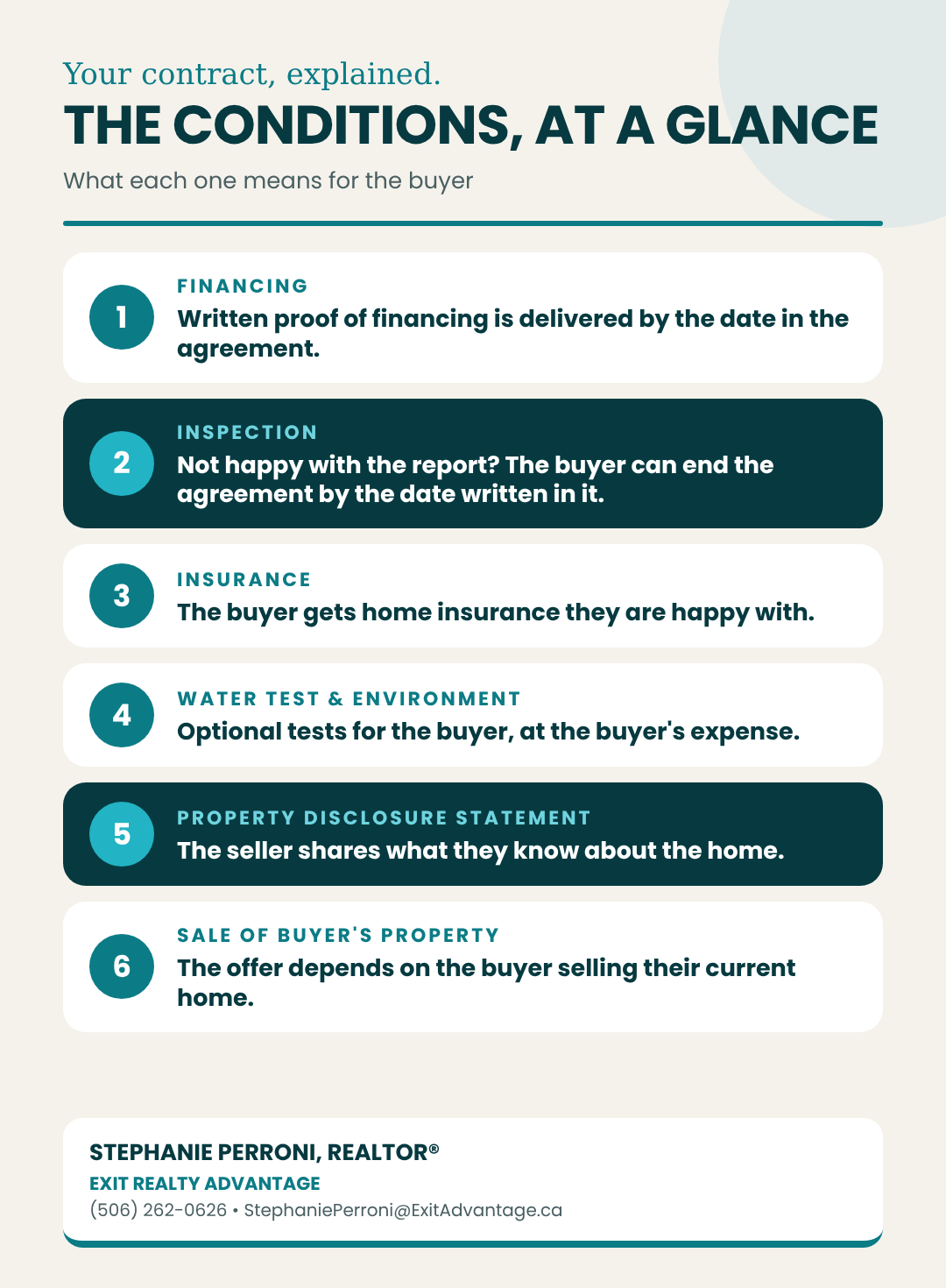
Conditions: Financing
A financing condition means the buyer must give the seller written proof of their financing approval by a date written in the agreement. If that does not happen by the date, the agreement ends. Click the Pre-Approval vs Pre-Qualification vs Final Approval in Canada link to see how approvals work, and ask your lender about your own personal situation, approval and respective deadlines. If you do not have a Mortgage Specialist, I have a professional network and am happy to share a list for you to choose from.
Conditions: Inspection
The buyer chooses whether they want a home inspection. If they do and they are not satisfied with the results, they can end the agreement by giving written notice by the date in the agreement. The buyer’s REALTOR® lets the seller’s REALTOR® know the outcome. Reading an inspection report alone can be very worrisome. I meet with you and the inspector once they are done to go over their findings. That’s a great time to discuss possible remedies if any issues are uncovered.
Conditions: Insurance
An offer can be conditional on the buyer getting home insurance they are happy with, effective on the closing date. They may ask for additional information that is not on the listing or accepted agreement like the age of the hot water tank or for measurements of a deck. I get that information for you to share with them if it’s needed.
Conditions: Water Test and Environment
If the home is on municipal services, you typically wouldn’t have a water test condition. If a home has its own water supply, the buyer can choose to have the water tested, and the agreement can set the standards the results must meet. If they do not meet the standards, the buyer can ask for remedies such as installing an ultraviolet (UV) system to destroy pathogens like E. coli and coliform if the results come back too high. The buyer can also end the agreement by the date written in it. The buyer can also choose to have an environmental assessment done. Both are typically at the buyer’s expense.
Conditions: Property Disclosure Statement
This is a form where the seller shares what they know about the home. The agreement says whether the seller will provide one and by when. If the buyer is not satisfied with what it says, they can end the agreement by giving written notice by the date in the agreement.
Conditions: Sale of the Buyer’s Property
Some buyers need to sell their current home first, and an offer can be conditional on that. In that case, the seller can keep the home on the market. If another acceptable offer comes in, the buyer is told and has a set number of hours to remove their condition, or the agreement ends.
Fixtures, Chattels and Leased Equipment
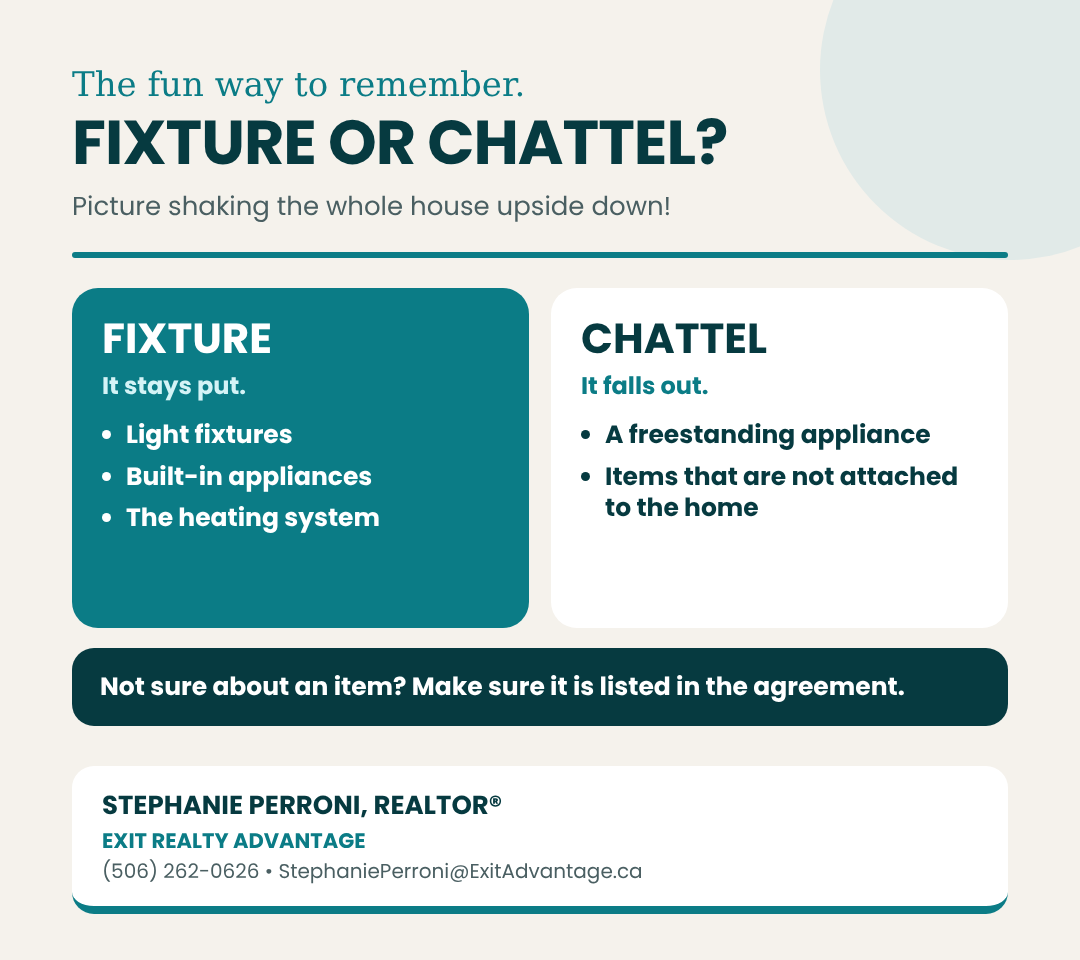
Fixtures are things attached to the home, like light fixtures, built-in appliances, and the heating system, and they are included in the price unless the agreement says otherwise. Chattels are items that are not attached, like a freestanding appliance, and they are only included if they are listed. The agreement also has a place to list leased equipment, like a hot water tank, furnace, propane tank, or security system, because a buyer may have to buy it from the lessor or take over the lease.
Offers, Counter Offers and Acceptance
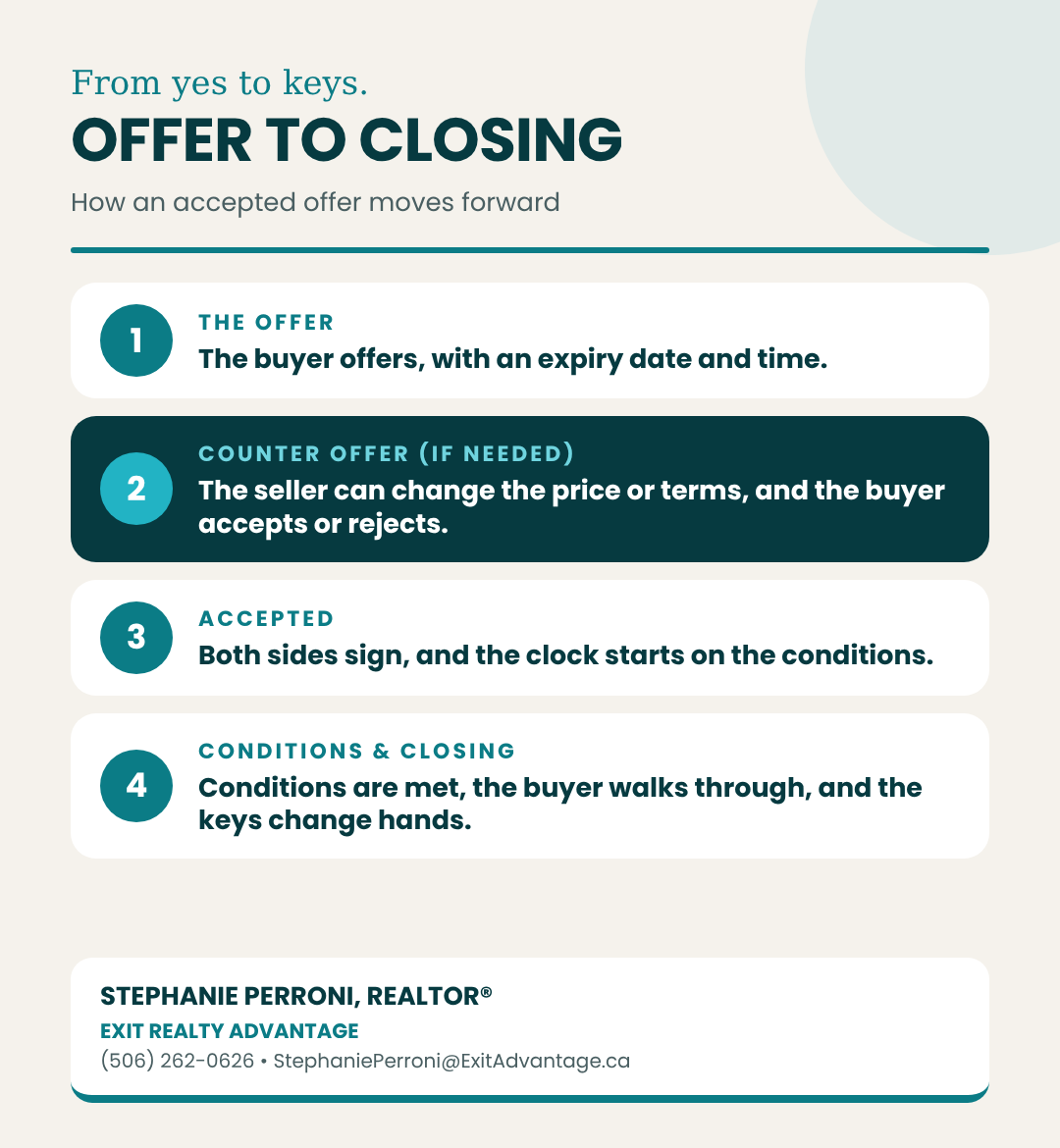
Every offer has an expiry date and time. If the seller has not accepted by then, the offer may no longer be open. The seller can accept the offer, reject it, or make a counter offer with a changed price or terms, and the buyer can then accept or reject that counter offer. There is also a space for additional terms, which is where custom conditions go. For example, a seller might agree to mow the lawn before closing, or have the furnace or heat pump professionally serviced and give the buyer the receipts at closing.
What Happens if a Condition Is Not Met?
If a condition is not met, the agreement can end, and the buyer’s deposit is usually returned. Dates are very important, because the agreement treats deadlines as firm. Please ask your lawyer or me about your specific situation, including what could happen if a buyer does not complete the sale.
Next Steps
I would be honoured to make a new connection and have the privilege of helping you through your next purchase or sale. Click the contact link to reach out, or call me directly at 506-262-0626.
Are you a planner who loves to know what lies ahead? Then you will love my How to Buy a Home in New Brunswick: Step-by-Step and How to Sell a Home in New Brunswick: Step-by-Step guides!
Sources:
- The New Brunswick Real Estate Association, Agreement of Purchase and Sale, Form 300 (revised February 2025)
Please note: I’m a REALTOR® in New Brunswick, not a lawyer, mortgage lender or broker, accountant, tax or financial advisor, home inspector, or insurance professional. This post is general information only and is not legal, financial, tax, or investment advice. Costs, rates, and rules can change, and every situation is different. Please consult the appropriate licensed professional for your situation: your lawyer for legal and closing matters, your lender or mortgage professional for financing, and your accountant or tax professional for tax questions.
